Service

Plan and deliver a controlled manufacturing cloud migration

Manufacturing cloud migration includes assessing applications and dependencies, choosing what should move, preparing the cloud environment, transferring systems and data, testing recovery, and handing over support. Factory connectivity, latency, licensing, and local autonomy shape placement.

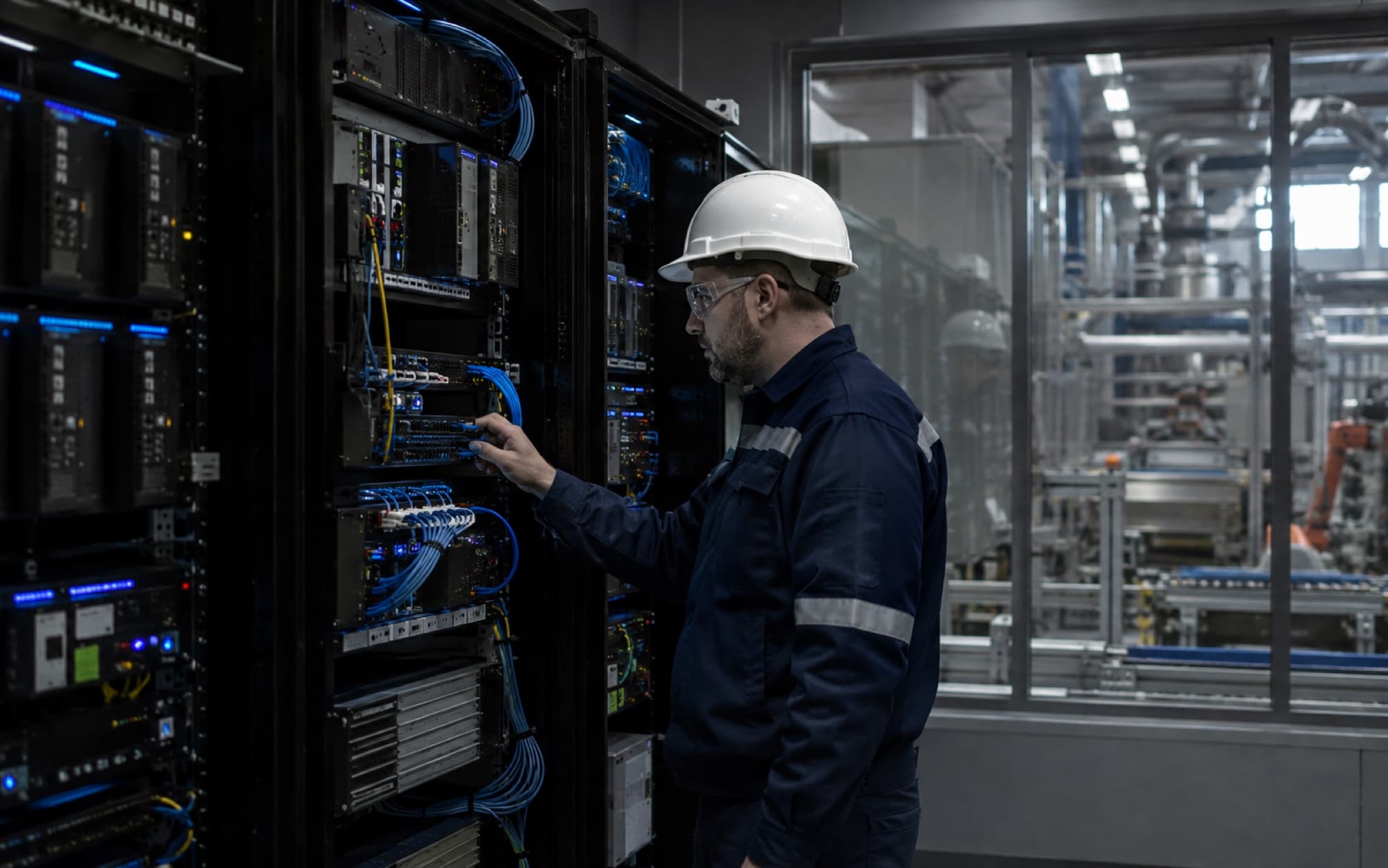
Illustrative technician reviewing production information beside a component inspection station
01

Understand

Where this service fits

This work is most useful when operational symptoms are visible but the target workflow, ownership, or system boundary is not yet dependable.

01

Server risk is known but application dependencies are not

02

Backups exist without recent restore evidence

03

Infrastructure costs cannot be compared on like-for-like scope

04

A large cutover is proposed without tested rollback

02

Understand

A proposed before-and-after workflow

Current state

Applications, jobs, file shares, identities, and integrations are moved as a single infrastructure task with hidden dependencies.

Proposed state

Workloads are classified, dependencies mapped, target controls prepared, and migration waves rehearsed with acceptance criteria, rollback triggers, restore tests, and named owners.

The future state remains a design until it is tested with the people, data, systems, and exceptions in scope.

03

Deliver

Scope and deliverables

The exact package follows discovery and agreed responsibilities. A typical engagement can include:

01

Application and dependency inventory

02

Placement decision and comparable cost model

03

Landing-zone and connectivity design

04

Wave plan, test scripts, cutover and rollback runbooks

05

Operations handover and responsibility matrix

04

Deliver

Data and decisions needed

Access is limited to what the agreed work needs. Client owners approve source authority, operational rules, and acceptance criteria.

ReferenceInput or decision to establish
01Application owners, versions, and support status
02Network flows and identity dependencies
03Utilization, licensing, backup, and recovery needs
04Maintenance windows and factory continuity requirements
05

Deliver

Delivery sequence

A bounded sequence protects continuity and makes learning visible before wider rollout.

  1. 01
    Discover workloads and dependenciesDefine evidence and the exception path
  2. 02
    Decide retain, retire, replace, or migrateDefine evidence and the exception path
  3. 03
    Prepare identity, network, logging, and cost controlsDefine evidence and the exception path
  4. 04
    Pilot a low-coupling workloadDefine evidence and the exception path
  5. 05
    Migrate waves with rollback gatesDefine evidence and the exception path
  6. 06
    Verify recovery and transfer operationsConfirm ownership and handover
06

Govern

How it fits existing systems

Existing systems are mapped by business responsibility, supported interface, data authority, update timing, and failure behavior. The design may integrate, configure, retain, or replace a component; no universal compatibility is assumed.

07

Govern

Measurement, timeline, and cost

Baseline definitions are agreed before implementation. Timeline and cost vary with system access, data quality, process variation, security, testing, number of sites, adoption, and support scope.

01

Workloads with validated dependencies

02

Recovery tests meeting agreed objectives

03

Incidents attributable to migration

04

Comparable run cost including licenses, support, backup, and network

08

Govern

When a different approach may be better

Retaining or refreshing an on-site workload may be better when connectivity, latency, vendor support, machine autonomy, or migration economics do not support a move.

Buying questions

Questions to resolve before work starts

These answers establish a practical default. Actual scope follows the systems, process, data, risks, and responsibilities in view.

01Can this work with our existing systems?

Usually, but compatibility must be confirmed. We first identify supported interfaces, data ownership, update frequency, security constraints, and failure behavior. Where a direct connection is unsafe or unavailable, a controlled file exchange or staged replacement may be more appropriate.

02How do you limit disruption during rollout?

We keep the first scope bounded, test with representative data, define rollback and manual fallback procedures, and agree a cutover window with process owners. Safety-critical control remains outside an information-workflow project unless separately assessed by qualified specialists.

03How are scope, timeline, and price determined?

They depend on process variation, systems and interfaces, data condition, security requirements, testing effort, number of sites, training, and support boundaries. Discovery produces an evidence-based scope rather than an unsupported fixed promise.

04How do we know whether the work is worthwhile?

Agree the metric, definition, baseline period, comparison conditions, data source, owner, and review date before changing the workflow. Released capacity is reported separately from cash savings, and operational outcomes are not attributed to software without comparable evidence.

05What happens when an automated step fails?

The design should make failures visible, retain the source record, route the item to an owned exception queue, allow authorized correction, and preserve an audit history. A workflow is incomplete until its exception path is tested.

01

Start with one process

Which workflow currently costs your team the most time?

Bring one normal example and one exception. Use them to frame the systems, decisions, controls, and evidence a sensible next step needs.

Discuss your operation